Monday, May 28, 2018

Chanticleer's Ruin Garden

The first weekend in May, I made a photo foray with a classmate and our instructor to Mt Cuba, Winterthur, and Chanticleer., which are outside of Wilmington, DE, and Philadelphia, PA, respectively.  I'd never seen Chanticleer in the spring.  It was overcast, but, blissfully, no rain. There was an amazing convergence of bloom at all of the gardens given the slow, cool spring we had in the mid-Atlantic.  But for us, coming from the Washington DC area, it was also like going back in time and experiencing some of spring all over again. 

Below are views of the Ruin Garden, which is a folly built by the previous director, who hoped to use an old house on the property as the basis for his ruin, but had to resort to a 'new' ruin instead.  


The face and fountain are in the back right corner below.  


The 'pool table' is modeled after a sarcaphogous.


There were a lot of tulips in purple tones throughout the garden.

Here are purple alliums, and more tulips in the gravel garden.  The touch of orange is just right; I think they are more tulips.  I think the ruin is especially effective when viewed from a distance.

Chanticleer is a magical and inventive place.  I wish I could visit every week!


Friday, May 25, 2018

Intentional Camera Movement (ICM) in the Garden

I've been an absent blogger, focusing more on photography (and my class's blog) than here.  But this series includes the garden, though a blurry one.  I experimented with "Intentional Camera Movement," as it's known.   Do these just make you dizzy or is there something else there?  


The direction of the pan, seems to affect my level of wooziness.  Going up or down is better than moving a long a horizontal plane. 


Some of them look a little painterly, no? 


This one makes me a bit dizzy.  I was panning from side to side.


It's interesting to see what textures come through, like the yew needles (the new foliage is very yellow, one of its features). 


And at rest, the 'Red Sentinel' Japanese maples, Baptisia, Amsonia, and Louisiana iris, with the yew just peeking through.  


Thursday, April 12, 2018

Quarry Gardens at Schuyler


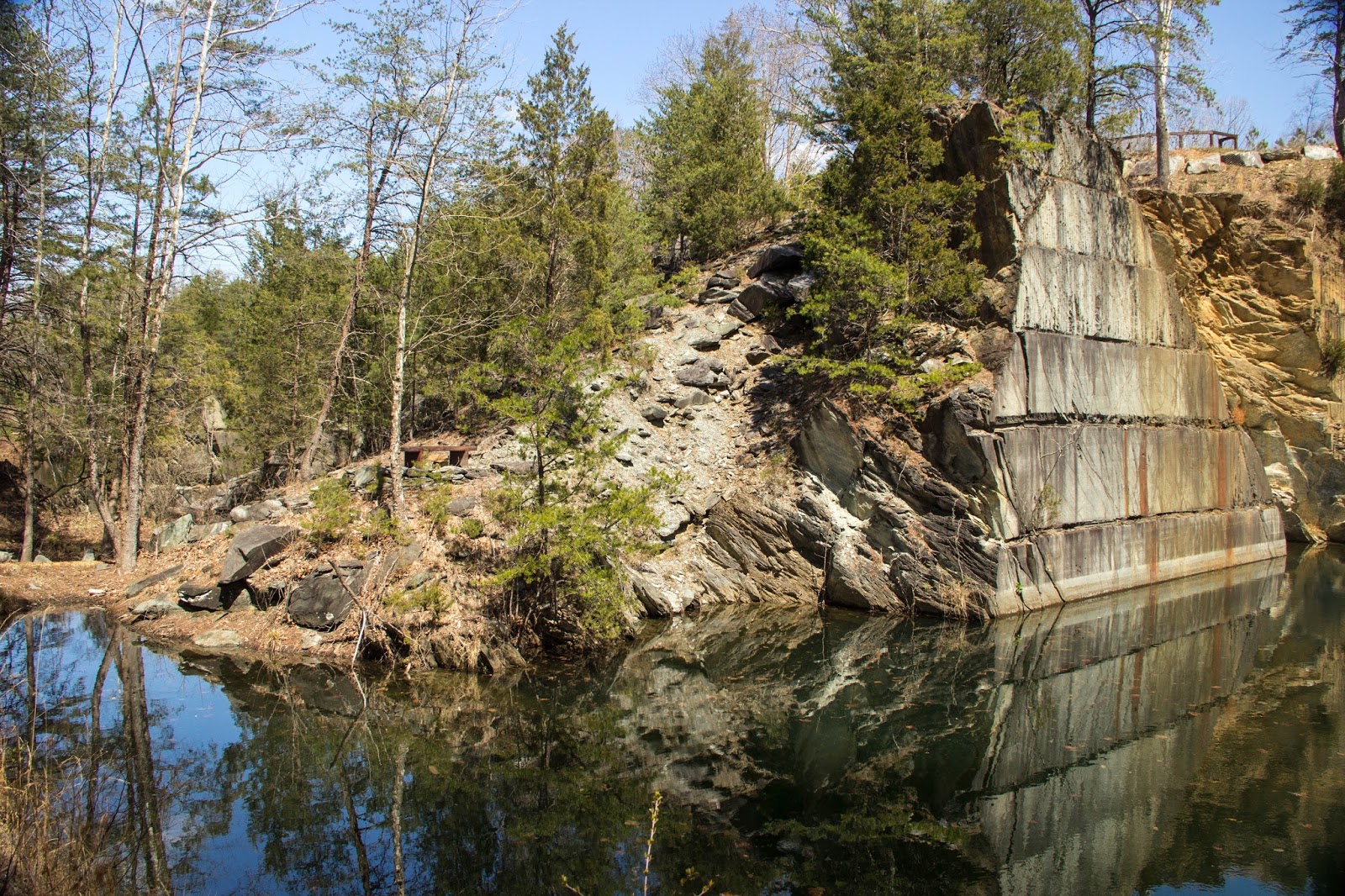
On Sunday, the Potomac Chapter of the North American Rock Garden Society visited the newly opened Quarry Gardens, a native plant garden developed around old soap stone quarries.  The garden is about a half hour south of Charlottesville, VA.  

Check it our if you're in the vicinity.  It's a gorgeous place.  


Like many quarries, the old pits have filled  with water that's an amazing blue green color.  


They have one of the largest expanses of Reindeer Lichen in the state. (I think I have that right.) 


This is probably an old tool box belonging to a quarry worker.


New bridges help connect paths over waterways.


Beech benches installed for taking in the dramatic views.


Elaine L. and her husband equipped with walking sticks.


Big woodpecker activity!


The ridges are formed by the drills used to cut the stone.  I thought it looked more dynamic in black  white.

Sunday, February 4, 2018

Stoners: What Rock Gardeners Do in Winter


Friday I spent the blustery morning with fellow "stoners," collecting beautiful rock from the Medford Quarry in Westminster, MD, pictured below.   We are members of the Potomac Chapter of the North American Rock Garden Society Most of our field trips focus on plants, but thanks to Kevin M. and Dick H., this one is all about finding rocks to go with them.  It's our second visit in two years.

As so often happens in quarries,  the deepest portion is now a small lake filled with startlingly blue-green water, probably due to the minerals in the stone.  I used to swim in an abandoned quarry in upstate New York where the water was a similar color.  Does that mean it was similar stone?  I don't know.


This quarry features marble of varying colors -- mauve to pinkish tones, grey-green, tan, and stone with black and white striations. 

John W. combing the area for the perfect rock  
You can appreciate the scale of the place when you see how small we look in comparison to the landscape.  Above, John walks through an expanse of pink marble.

Geologically speaking, marble, a metamorphic rock,  forms when limestone, sedimentary stone, is exposed to extreme heat and pressure.   
John would love to take the big boulder home, if only it would fit in his truck. 
Lynn T. carries one of her treasures back up the hill. 

Like several of us, Janet M. has returned for this second winter excursion to collect rocks. 
Behind Janet, you can see where the gray-green stone buts up again the pink stone. 


Things are quiet at the quarry in winter, with few big trucks coming and going, which is why they let us in at this time of year.  Medford generously allows us to take what we can fit in our vehicles. 


Ken W. collecting 


I'm not sure how this fine, pinky gravel came to be -- is it naturally occurring, left over debris, or manufactured?   In the right garden, it could look fantastic as material for a path.   


   That could be Little bluestem growing at the top of the ridge. 


  Some of the stone includes beautiful calcite crystals like the one above.  The calcite could be what       makes the water such a gorgeous blue. 

Dan S.  and Lynn T.  'Got room in that wheelbarrow?'


  It was considerably colder this year than last.  But with the ground frozen, at least we were spared  the mud of last year and vehicles were less likely to get stuck.  Some of us dared to drive in without 4-wheel drive. 

What will become of my stones?  I will add them to a trough and build more cairns in the garden.

Same time next year, stoners?  I'd go back just to look at the other-worldly scenery.